





Adam Crymble argues that it is difficult to define digital history and that the field would be better served by historiographical studies rather than arguing about definitions.(1) His book explored the development of digital history as various periods where historians worked with computers, including cliometrics, archiving, teaching, self-training, and communication. Like many truth claims, proponents of digital history have defended their approach as the correct one. While doing this, they often ignore that their new approaches and questions are dependent upon their regional location and time period.(2) Therefore, the meaning and history of “digital history” is different depending on who you ask.
It is my opinion that digital history is better understood as a tool employed by historians in their various modalities to analyze, interpret, present, and instruct about the past. The advancement of digitized resources and scholarly databases, like JSTOR and Hathi Trust, have increased the use of the digital in the historical discipline exponentially. The move to digital journals, ebooks, podcasts and virtual conferences has forced the profession to embrace technology as essential to presenting historical arguments. Approaching the subject from this viewpoint admits the reality that in the twenty-first century all historians merge the digital into their scholarly work – be it the archivist providing pdfs of primary sources, the social historian developing a database, the undergraduate designing an infographic on Canva, or the senior historian forced to learn Zoom during the Covid pandemic.
If digital history is a tool, then what is a digital humanist/history? In class we discussed that this is a matter of self identification rather than a solidified methodology. It is a helpful identification when trying to secure funding, or colleagues working on similar projects. However, claiming the title is neither a requirement or restriction. Plenty of people doing the work of digital history describe themselves as traditional historians, while there are those that identify as digital historians that engage in the traditional monograph-producing practice. With that said, there are elements that consistently appear among practitioners. Their work often takes an interdisciplinary approach, building on the scholarship of computer scientists, sociologists, anthropologists, and others. This interdisciplinary approach naturally leads to collaboration with other scholars in a variety of fields. These two factors shape the products produced by digital historians, but the use of the internet has developed the field’s third trait – commitment to open access.(3)
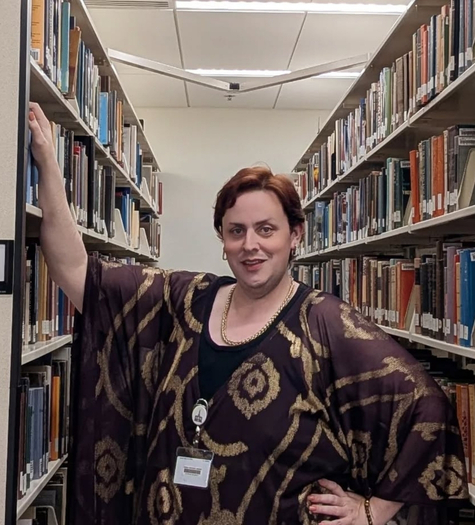
My career is a reflection of this complexity. I’m an archivist for an academic institution with a decade of experience. I earned my masters in Public History in 2014, during what Crymble called the third wave of digital education and the era of “Big Data.”(4) We were encouraged to use datasets as evidence in our work, funding was more likely to be granted to students working on digitization or mapping projects, and most of our internships were for museums wishing to update their collections management software. I did not view this as digital history but merely the work of public historians. I still do to some degree, but I must admit that the digital has become more central to my work over the years. I spend more of my time managing databases, digitizing documents, and uploading to Omeka than I do researching or writing biographies for finding aids. My work as an archivist now involves routine meetings with software developers, and I can’t announce a new accession without first involving the social media team. I may self-identify as a public historian, but the main tools I use are the elements of digital history.
My view of digital history as a tool means that this week our class became a digital shop class where we engaged with its mechanisms. By building a website, we have crafted a digital platform that makes our historical analysis and arguments available to the public for consumption.(5) Congratulations everyone! We are now digital historians, even if we’re not.
1. Adam Crymble, Technology and the Historian: Transformations in the Digital Age, (University of Illinois Press: Urbana, IL, 2021), 8-9.
2. Crymble, Technology and the Historian, 11.
3. Jessica Otis, “Historical Scholarship in the Digital Age,” HIST 696: Clio Wired (Class Discussion, George Mason University, Fairfax, VA, August 24, 2026).
4. Crymble, Technology and the Historian, 99-102.
5. Douglas Seefeldt and William G. Thomas, “What Is Digital History: A Look at Some Exemplar Projects” from the Special Issue, Intersections: History and New Media, Perspectives On History, May 1, 2009, https://www.historians.org/perspectives-article/what-is-digital-history-may-2009/
5 responses to “What Is Digital History?”
I love the view of this class as a digital history “shop class,” as it were. I think one of the things I’m looking forward to most in our blog posts and class discussions as we move forward is seeing how we can blend digital history “theory” with digital history practice, much like what one would do in a traditional shop class. As you write, digital history is a tool in our historical studies arsenal, and one that is only becoming more important in our increasingly digital lives. I’ll be interested to hear more as the class progresses about how your experience as a professional public historian engaged with aspects of digital history aligns with the discussions we engage in around the topic as a class.
Denton, you make great points reflecting on your own career that digital tools are becoming the standard for preserving historical collections in public-facing institutions. It’s interesting that our reading of Crymble showcased the early efforts of aspects like digitizing books and other primary sources, that have now become part of a standard routine for archivists. In your Master’s degree program, were you encouraged to learn digital tools, or have all your experience with best practices in digitization based on your professional experience as an archivist?
Lena,
When I went through my program, digitization was considered the work of specialists. The thought was that digitization needed to be done by computer experts under the supervision of archivists and conservationists. Keep in mind that Omeka’s public launch was in 2010. I completed my program in 2014.
Bonjour Denton!
I appreciate your optimism: “We are now digital historians!” It’s helpful to hear your experience as someone already working as a public historian. I’m not surprised at the amount of digital work you have to do, from social media to digitization – do you think that public history has evolved to the point that it is more about the medium than the content? Has it always been more about the medium? Looking forward to hearing how you’ve worked these things out in your own practice.
Karine,
In my opinion, Public History has always been about the audience. Public historians generally have a goal of presenting their work to the general pubic, rather than academics. I remember a professor saying “if you want to write to only ten people that care, become an academic historian.” A harsh critique, though representative of how the feilds saw each other in the 2010s. So for public historians the medium is always changing, the language changes, but the content and the audience remains the same.